JUNK IT
AKA Michael Klamerus asked the net to blog about obscure games for their birthday and I'm late so I'm going to talk about Lego Shockwave stuff
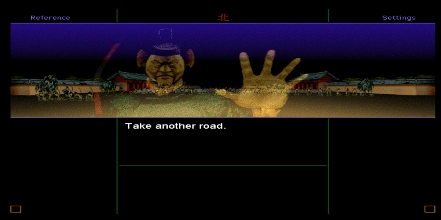
A lot of digital ink has been spilled on the impact of Flash games, the heady mix of semi-unsupervised internet access and the ease of pirating Macromedia products produced at least one banger for every hundred pieces of Iraq war agitprop. It's understandable that Shockwave doesn't get as much love- its 3D capabilities made it orders of magnitude more complex than the tweened vectors of Flash, keeping it more in the hands of professionals than teenage hobbyists, and while I've a lot of love for the surreal Heian nightmare of Cosmology of Kyoto and a morbid curiosity in Osamu Sato's Eastern Mind: The Lost Souls of Tong Nou, the Shockwave games available on the Internet were uniformly A Bit Shit.
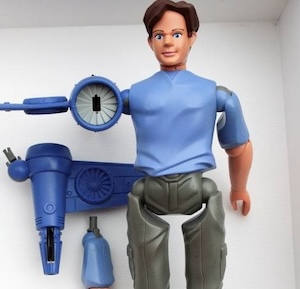
Speaking of, Lego was not doing so hot in the 00s. While the Bionicle line and the beginning of licensed set Hell kept them above water, they desperately overextended in the effort to get kids to stop catching those darn Pokemon creatures. My favourite example of this is Galidor, a not very Lego series of customisable action-figures, which are strange and upsetting even before you find out they're in service of a Kamen Rider-esque TV series no one liked.
I have no misplaced nostalgia for Galidor. 2002 me had no idea it existed. But I did really like Lego, and my then recently deceased grandfather loved James Bond, so I was a mark for the extremely unsuccessful Lego Spybotics, a line that existed for exactly a year before imploding to no great fanfare. A subseries of the quite-cool-but-now-also-dead-Mindstorms bots, the Spybots were little R/C cars that you could play out missions with, some included on the CD and some online, transferred to your robot by the power of Infra Red. It was about as neat as that implies, requiring some irritating set up for mild amounts of fun, with your imagination doing much of the heavy lifting. A pretty good gift for a nerd child, and one that did stop them playing videogames for a bit. Plus it came in transparent purple, as was the style at the time.
But wait! Videogames! Lego had those too. Lego Loco! Lego Racers! Those are good, but what about Lego Robohunter 2 Spy City the Shockwave Game? A confusingly Mindstorms but not Spybotics themed espionage sim in which you drive a little car with a camera in a low-poly European city, tailing shadowy figures in the night. As a child I didn't know about Brand Synergy so when I discovered this game at an after-school club I instantly mapped it onto my shiny new Spybot. It was a game I never beat, but one that invaded my imagination, unnerving figures gliding through dreams like the gentleman of Sato's LSD: Dream Emulator, and one that would crawl out of my memory's obscure corners when I got to the unjustly maligned third act of Metal Gear Solid 4.
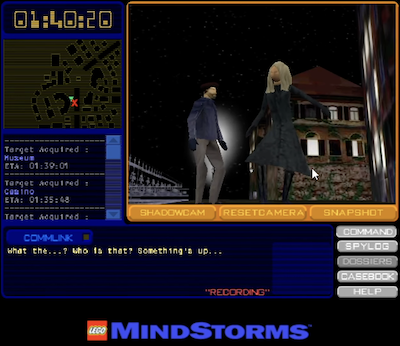
This, like the slightly more well known Lego Shockwave game Junk Bot, has been preserved via Flashpoint, which would make this article a lot more informative if I could get the damn thing to work. A necessary measure to put dirty MacOS users like myself back in their place no doubt, but it did get me thinking about preservation, how it is positioned as a uniform good, and well, should a Lego Shockwave game advertising a discontinued product live forever?
On my TV there is a sticker. It's from the game The Silver Case. It says kill the past. Thematic relevance and broader Grasshopper Manufacture tie-ins aside, its a sentiment that I tend to agree with. I loathe the weight of tradition in the United Kingdom, I've left behind previous identities, I will always be looking to the horizon. "Artefacts of a dead world will weaken us" and all that. Yet it's a sentiment from a PS1 game, one made in the depths of Japan's lost decade, the 90s economic miasma that accidentally became forever. Most of the games I play are from this decade, or made by cool gay people, the present and future of the broader gaming landscape fundamentally does not interest me. It is paradoxically an exciting time to be into 30 year old videogames, with many fan-translations of white whales coming to fruition, and emulation only getting more performant, accurate and portable. Recently I've been playing Pepsiman, to the bafflement of my girlfriend. Where I see a kitschy artefact, she sees crass commercialism, unworthy of attention. I can't say she's wrong, even if it is extremely funny that the director of the Zero Escape games worked on it. I would not weep if Pepsiman was lost to history, and ideally the conditions that created Pepsiman will not last much longer. But it is memorable, and by mentioning it here I will continue the great chain of referencing that will lead to ever more people playing Pepsi for TV Game.

Lego Robohunter 2 Spy City is not Pepsiman. It is similar only that it exists to worm into your brain, to help you make more connections between Brand and Life. It is not beguiling or kitschy, and its most memorable aspect is that which cannot be preserved- the context it was presented in. No child is going to happen upon it and be freaked out by polygon people. It exists in Flashpoint for database animals like me to say "oh yeah, that" to, to satisfy an itch in your memory, or at best to demonstrate what kind of 3D gaming was possible on the internet in 2001. Perhaps thats enough. I'm not the one making the call, I don't feel that moral imperative. I'm realistically not going to think about this game ever again, it's going to be thrown into the mental dustbin with Dancing Bush and Interactive Buddy.
Then again, I do love trash.