AKA Michael Klamerus asked the net to blog about obscure games for their birthday and I'm late so I'm going to talk about Lego Shockwave stuff
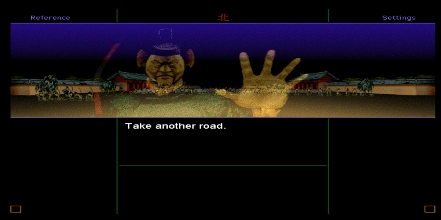
A lot of digital ink has been spilled on the impact of Flash games, the heady mix of semi-unsupervised internet access and the ease of pirating Macromedia products produced at least one banger for every hundred pieces of Iraq war agitprop. It's understandable that Shockwave doesn't get as much love- its 3D capabilities made it orders of magnitude more complex than the tweened vectors of Flash, keeping it more in the hands of professionals than teenage hobbyists, and while I've a lot of love for the surreal Heian nightmare of Cosmology of Kyoto and a morbid curiosity in Osamu Sato's Eastern Mind: The Lost Souls of Tong Nou, the Shockwave games available on the Internet were uniformly A Bit Shit.
Speaking of, Lego was not doing so hot in the 00s. While the Bionicle line and the beginning of licensed set Hell kept them above water, they desperately overextended in the effort to get kids to stop catching those darn Pokemon creatures. My favourite example of this is Galidor, a not very Lego series of customisable action-figures, which are strange and upsetting even before you find out they're in service of a Kamen Rider-esque TV series no one liked.
I have no misplaced nostalgia for Galidor. 2002 me had no idea it existed. But I did really like Lego, and my then recently deceased grandfather loved James Bond, so I was a mark for the extremely unsuccessful Lego Spybotics, a line that existed for exactly a year before imploding to no great fanfare. A subseries of the quite-cool-but-now-also-dead-Mindstorms bots, the Spybots were little R/C cars that you could play out missions with, some included on the CD and some online, transferred to your robot by the power of Infra Red. It was about as neat as that implies, requiring some irritating set up for mild amounts of fun, with your imagination doing much of the heavy lifting. A pretty good gift for a nerd child, and one that did stop them playing videogames for a bit. Plus it came in transparent purple, as was the style at the time.
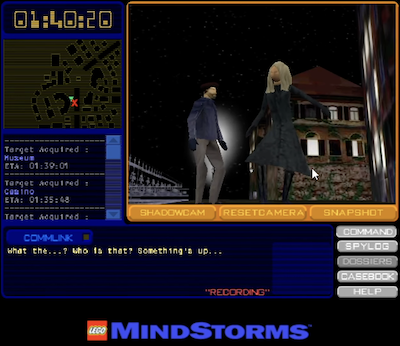
But wait! Videogames! Lego had those too. Lego Loco! Lego Racers! Those are good, but what about Lego Robohunter 2 Spy City the Shockwave Game? A confusingly Mindstorms but not Spybotics themed espionage sim in which you drive a little car with a camera in a low-poly European city, tailing shadowy figures in the night. As a child I didn't know about Brand Synergy so when I discovered this game at an after-school club I instantly mapped it onto my shiny new Spybot. It was a game I never beat, but one that invaded my imagination, unnerving figures gliding through dreams like the gentleman of Sato's LSD: Dream Emulator, and one that would crawl out of my memory's obscure corners when I got to the unjustly maligned third act of Metal Gear Solid 4.
This, like the slightly more well known Lego Shockwave game Junk Bot, has been preserved via Flashpoint, which would make this article a lot more informative if I could get the damn thing to work. A necessary measure to put dirty MacOS users like myself back in their place no doubt, but it did get me thinking about preservation, how it is positioned as a uniform good, and well, should a Lego Shockwave game advertising a discontinued product live forever?
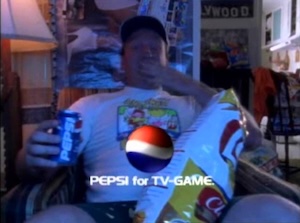
On my TV there is a sticker. It's from the game The Silver Case. It says kill the past. Thematic relevance and broader Grasshopper Manufacture tie-ins aside, its a sentiment that I tend to agree with. I loathe the weight of tradition in the United Kingdom, I've left behind previous identities, I will always be looking to the horizon. "Artefacts of a dead world will weaken us" and all that. Yet it's a sentiment from a PS1 game, one made in the depths of Japan's lost decade, the 90s economic miasma that accidentally became forever. Most of the games I play are from this decade, or made by cool gay people, the present and future of the broader gaming landscape fundamentally does not interest me. It is paradoxically an exciting time to be into 30 year old videogames, with many fan-translations of white whales coming to fruition, and emulation only getting more performant, accurate and portable. Recently I've been playing Pepsiman, to the bafflement of my girlfriend. Where I see a kitschy artefact, she sees crass commercialism, unworthy of attention. I can't say she's wrong, even if it is extremely funny that the director of the Zero Escape games worked on it. I would not weep if Pepsiman was lost to history, and ideally the conditions that created Pepsiman will not last much longer. But it is memorable, and by mentioning it here I will continue the great chain of referencing that will lead to ever more people playing Pepsi for TV Game.
Lego Robohunter 2 Spy City is not Pepsiman. It is similar only that it exists to worm into your brain, to help you make more connections between Brand and Life. It is not beguiling or kitschy, and its most memorable aspect is that which cannot be preserved- the context it was presented in. No child is going to happen upon it and be freaked out by polygon people. It exists in Flashpoint for database animals like me to say "oh yeah, that" to, to satisfy an itch in your memory, or at best to demonstrate what kind of 3D gaming was possible on the internet in 2001. Perhaps thats enough. I'm not the one making the call, I don't feel that moral imperative. I'm realistically not going to think about this game ever again, it's going to be thrown into the mental dustbin with Dancing Bush and Interactive Buddy.
This landmark Japanese RPG receives a new or updated translation very often: approximately every 40 months.
Clyde Mandelin, Legends of Localization
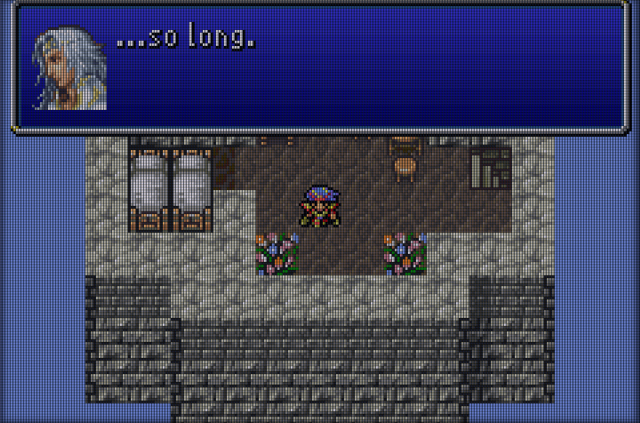
There truly are so many ways to play Final Fantasy IV. That's not my excuse for having buried it in the backlog for as long as I have. My first encounter with the series was the Final Fantasy III (3D remake), a game that felt extraordinarily unfriendly to the merely JRPG curious, having only dabbled with Pokémon and Mario & Luigi: Superstar Saga. I loved the music, the goofy chibi characters, and I maintain that the Nintendo DS is the best form factor for JRPGs, but complexity of the job system didn't interface well with my adolescent brain, a to me puzzling degree of freedom with the limitation of required abilities for certain dungeons. It still left a positive enough impression that I'd try again with the Final Fantasy IV (3D Remake), finding some relief in having to play the party the narrative dealt, only to be crushed by mid-game bosses. Almost two decades later, and with considerably more JRPG experience under my belt, I felt it was a good time to revisit the original version, or rather the closest to the original version that wouldn't be compromised by translation errors.
Full disclosure, I did not play the vanilla release on actual hardware, but rather a ROM patched to bring the colours and music closer to the SNES original on the Miyoo Mini+. As with a lot of post-launch lineup GBA games, TOSE opted for a more garish palette to compensate for the dim LCD of base model, and lacking a dedicated sound chip of its own there was no way the music would match up to the S-SMP. Unless you are playing on that delightful blobject of a system I would say the former patch is a no-brainer, and the latter does get a lot closer to the SNES sound, even if replacing epilogue music with a orchestrated version is of questionable enough taste to prevent a full-throated recommendation. Playing it on the Miyoo was a surprisingly comfortable experience, the mismatch of aspect ratio handled tastefully by the Perfect GBA overlay and the quick-resume function of Onion OS certainly made the gruelling floor-is-lava Sylph Cave a more tolerable experience.
All these conveniences do raise questions of authenticity. Save points within dungeons bring palpable relief, but less so if one has an automatic save-state to fall back on. The final area in particular is a brutal test of resources, a seemingly endless descent that taunts the loot-goblin gamer brain with armour and weaponry guarded by boss-tier enemies, a gamble that simply doesn't work with an added safety net. It calls to mind a quotation from Edgar Allan Poe that stuck in my craw in university:
The ordinary novel is objectionable, from its length, for reasons already stated in substance. As it cannot be read at one sitting, it deprives itself, of course, of the immense force derivable from totality. Worldly interests intervening during the pauses of perusal, modify, annul, or counteract, in a greater or less degree, the impressions of the book. But simple cessation in reading would, of itself, be sufficient to destroy the true unity. In the brief tale, however, the author is enabled to carry out the fulness of his intention, be it what it may. During the hour of perusal the soul of the reader is at the writer's control.
As a Novel Enjoyer I can't say I fully agree, but the concept of totality is something that gnaws at my brain- I prefer movies to television for that reason, to be at the mercy of the creator, and it's almost certainly why I predominantly write short fiction, to put others at that same mercy. This finds its way into the games I play too- I love arcade games, stages and missions instead of open worlds, fixed camera friction over Player Freedom and Expression. But I'm not interested in a No True Scotsman argument either- when I play Doom I bristle at the thought of saving mid level, but I still play it in UZDoom with a mouse, autosaves and no pistol-starts. That it's taken me thirty odd years to get around to Final Fantasy IV, that it took some compromises to get to the end probably shouldn't irk me, but I'm going to try and let life get less in the way of whichever next one I play, and go with the flow the staff intended.
So no, was probably not the best way to play Final Fantasy IV. The screen crunch of the GBA edition makes navigating some dungeons way more annoying than it should be. The music, even patched, isn't quite as sumptuous as the Super Nintendo, and the Namingway edition received a 2.0 update while I was playing, so that might be the best way to play it? I gather people like the Pixel Remaster and PSP version, but the aesthetics of both and the weird judder of the former don't interest me much. If nothing else the experience has taught me to stress less about the perfect version of something, and any victory against the gamer brain has to be good.
Oh yeah and the game is pretty good. Five outta seven.
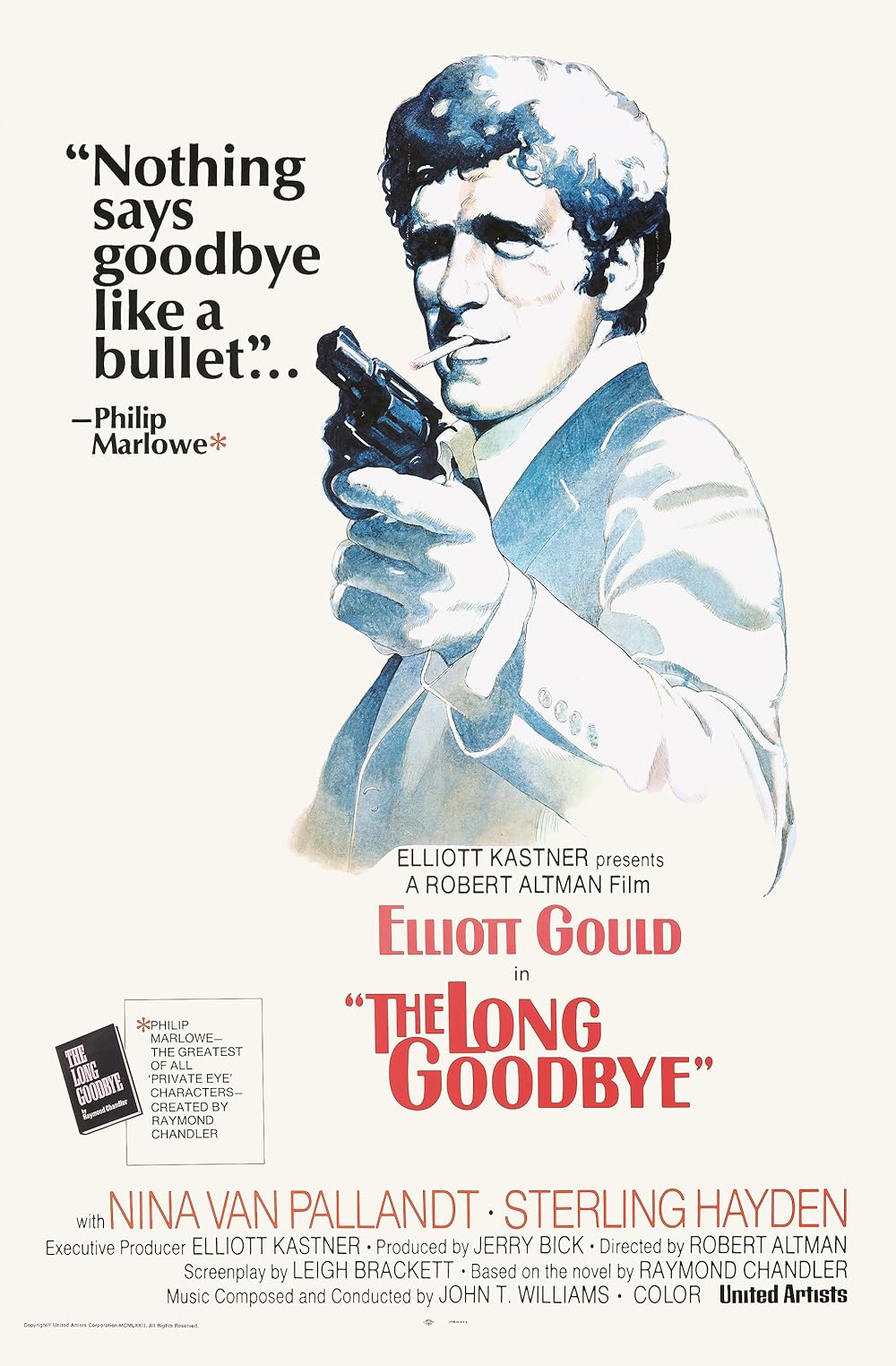
I watched The Long Goodbye this morning. I didn't choose it for any particular reason, beyond morning movies being one of the few benefits of the, uh, "flexibly employed", and that while watching Ran yesterday, I was struck by how given all the rectangles I possess for enjoying media, mere stuff makes up the majority of it. Every time I visit my parents I'm bewildered by the television always being on, parades of tepid game-shows no one is interested in, morning, evening and nightly news attended religiously, cooking shows with recipes to not make and adverts and adverts and adverts… just so much fucking stuff. But here I am, child of cyberspace, the millions of lifetimes worth of incredible art accessible, watching a guy with admittedly incredible facial hair teach me how to assemble a model train set, a mild existential crisis brewing, a gnawing at the back of the skull, what the fuck am I doing?
I'm not pretentious enough to suggest anyone should engage with the highbrow. The other thing I watched this weekend was Techno Warriors, a movie in which virtual and non virtual cops fight M.Bison and a guy called Dinosaur, and it totally rocked. And not for nothing, have you seen what my website looks like, I love garbage. But y'know, some garbage is okay to eat, and it shouldn't be the whole thing. So I wanted to keep the train going with The Long Goodbye, and shocker, its great! It's a beautiful film with a palpable distaste for the cliches of the hard-boiled hero, but rather than merely building a cynical take down of Philip Marlowe, it transplants him into a world that has no real use for him, and leaves him to meander while he tries to help those around him with a moral code shot full of holes, as effectual as the absent gods of Ran. It's slow, luxuriant, the antithesis of stuff.
I think Metal Gear Solid Delta might be evil.
I brought it on myself. Because I was never going to pay for it, curiosity got the better of me when it was available by other means. Such curiosity didn't grab me for Bloober's take on Silent Hill 2, paradoxically because that is a work closer to my heart than Snake Eater, which is neither my favourite Metal Gear (that's 2, predictably) nor one I could have possibly had any nostalgia for, given that I didn't own a PlayStation 2. It's also, on the face of it, as far less offensive product. The Delta in the name apparently refers to "'change' or 'difference' without changing structure", which is a bewildering obtuse way of say its prettier with no real major differences. Bits that were missing from other re-releases are back here or remade, and there's some bones thrown to newcomers with a compass that points you where to go and a slightly more MGSV style control scheme, but that's about it. It is hard to be mad at, but in a former life I worked as a teacher, and well, I'm not mad, I'm not disappointed, I'm just depressed. It is possible to have fun, because Snake Eater is an excellent game, dodging the identity crisis of James Bond by letting all of the contradictions play into the narrative in way not dissimilar to the Chandlerisms of The Long Goodbye, but admittedly that film doesn't have a nuclear equipped tank that roars or a guy who can do hornet based telekinesis. But it's impossible to feel that there's any reason for it to exist, because it isn't meant to be enjoyed by humans. It is a safe bet for Konami, fresh of the safe bet of the Silent Hill 2 remake, though even safer given how much closer Snake Eater is to the modern Triple-A mono-genre, so there was less "need" to "fix" it. It is an object you can test your graphics card with, almost a hundred gigabytes of data to fill a hard-drive, a placation of those weirdos that got mad at the MGS3 pachinko machine for having shiny cutscenes, as if it being a machine designed to drain the coffers of aging chain-smokers was besides the point.
There are dozens of half finished articles on my hard-drive. One of those is about the Resident Evil remakes, and how even the one good one irritates me by calling itself Resident Evil, and how Capcom keeps making these without making the originals available in non-compromised form. As the most capitalist medium, you are not expected to treat videogames as serious art, even if they sometimes are. But I can't pretend even the Resident Evil games I dislike are well, evil. They might miss what I value in horror, they might be the bad kind of stupid, but even Resident Evil 6 is worth saying something about. The word that comes to mind with Delta is cosplay, but cosplay can be a charming display of creativity, whereas here I can smell the flies buzzing around Snake's gussied up corpse. Despite the hours and hours of labour, despite the rare earth minerals used up to make it and now run it, despite even the few stupid fucking changes like the fucking theme song now sounding like when freak du jour warbles their way through a national anthem at a sports game, or even the surreal moment of the Boss commenting on it "raining blood" made literal because it reckons perhaps correctly that you gotta be an A-class moron to be playing this, it doesn't manage to rise to the level of stuff.
It's nothing. It does nothing but take up space. It will make you think of nothing. At best it can only remind you that the conditions to make Snake Eater no longer exist. Even Kojima is making open world sequels now. I got up to just after the ladder, so I got to hear the mangled version of the theme song again. But thankfully I can choose. I can say goodbye.
And as Elliot Gould does not say in The Long Goodbye:
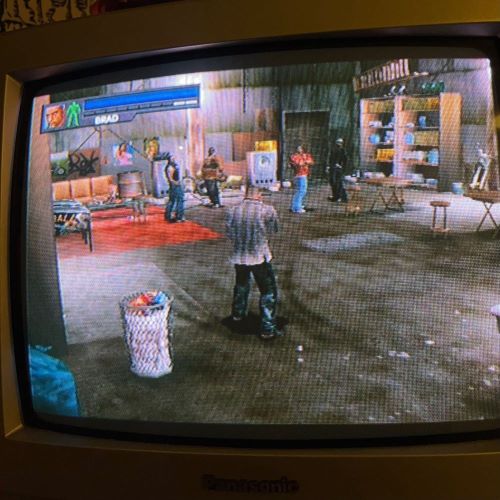
In the doldrums of anhedonia, when even some beautiful work of art cannot shift the gloopy sludge water of indifference pumping through my shell, I hack a device. Not so much in the console cowboy "I'm in" kinda way, that'd be actually cool. No, it's more just following contradictory YouTube videos until my eyes crust over and hoping I haven't bricked my Wii. The latest victim of my dry-eyed monomania was my girlfriends PS2, in which the modification was even more underwhelming than usual: the purchase of two memory cards, one that would let me load programs in the form of .elf files, the other that would accept a MicroSD card to put ISOs onto. The result- a newfound access to a library of games (plus the ones my girlfriend owns physically) for a console I never owned, all running on original hardware on a CRT (incidentally, feel free to suggest other games via email, the guestbook or on BlueSky!).
The main impetus was wanting to play Burnout 3, which fucking rocks, but the game I've played most so far is far less famous- Urban Reign, a vaguely Tekken adjacent 3D Namco
brawler in which you beat up endless-but-individually-named gang members with a mix of martial arts in scummy little dollhouse worlds to chugging nu-metal instrumentals, and it
really fucking rocks. After the fun but extremely bloated triple-A pomp of Indiana Jones and the Great Circle, its so refreshing to play a capital-V
Videogame. There's some vague set-up somewhere between The Warriors and Escape from LA but it might as well be an arcade machine attract mode, because you're here for the one-hundred individual missions, with objectives as varied as "beat up that one guy", "beat up all
those guys", "beat up one guy from that group" or any one of those with a time limit. If you've played the excellent, brutal and occassionally horseshit God Hand, it's kind of like if the excellent, brutal and often horseshit arena was a full game. Each of the hundred missions are only a handful of minutes long (the game helpfully keeps track of the 1:1 completion percentage for some reason), but they're pretty fucking mean, with enemies able to do everything you can do, and more in the boss fights. So while you could beat it in an afternoon, you'll have to get good at it first, which is a tall order when nothing else I've played feels like it.
The controls are very straight forward- square is dodge, triangle is grapple, circle is strike, but every button can be modified by a tilt of left analogue stick. A simple dodge
becomes a reversal, a grapple becomes a clothesline from hell (or a million other things), and your simple strike can be targeted at your opponents head, chest, or legs, which all
have individual toughness on top of their healthbar. It's a lot, and the game is constantly teaching you new things and giving you new stuff to play with. Triangle and Circle is
your special, and the starting spin kick is incredibly useful, but when you beat special one-on-one boss fights you gain access to whatever signature move they were previously
caving your head in with. Oh, and the X button makes you run, and if you press it while grappling you can accelerate the grapple, and you can use it run up walls, and then you can
do a dive attack...
Urban Reign is a game of ands, an excited child telling you what their cool new Action Man can do and how it combines with all the other toys they have,
it's both limited in scope but imaginatively deep. Which is why it reviewed averagely at the tail end of the PS2's life, lacking any cinematic ambitions or the stylistic panache of Devil May Cry. Boring protagonist, great combat, one hundred levels, off you go. It would never be my first recommendation from what is arguably the best console library of all time, but Urban Reign's lack of fussy bullshit and laser focus instantly commanded my attention and blasted away my anhedonia, and until I get the urge to futz with another device (my GameBoy Color is next) I'm happy to chip away at its hundred levels of increasingly cruel bullshit.
Because sometimes videogames are cool, and Urban Reign is videogames.
This last year I’ve pretty much only played games that are from the PS2 era at the latest or indie games, so the triple-A space has been something I’ve observed with increasing horror, gigantic mausoleum machines of ray-traced void, and in the case of the Astro-Bot, a platformer disguising a marketing engine disguising a tombstone for the only cool things Sony ever let on their consoles. I don’t have anything that would run these games even if I wanted to, except oh wait, I don’t but my girlfriend does, a monster desktop PC that I forget exists because she mostly uses it to play Nuclear Throne (my fault) and Vampire the Masquerade: Bloodlines (also my fault). I made a list of the very few games from this year I wanted to play, and skipped over the certainly more interesting Slitterhead and Kunitsu-Gami to play the 120GB franchise behemoth Indiana Jones and The Great Circle. This is because 1) for all their flaws, I liked Machine Games takes on Wolfenstein, 2) for all their flaws, I still like Indiana Jones. I am one of three people who saw Dial of Destiny in the cinema and then immediately retreated to rewatching Raiders again, and then again again recently in another harddrive demolishing 35mm scan:
Little did I know that The Great Circle would begin with an absurdly wanky recreation of the Raiders cold open, but fanservice is fine when I’m being serviced, and having spent the year bathing in hazy phosphors I was genuinely floored by the visual fidelity. This sense of awe would continue into its first luxurious hub, the Vatican, in which it really felt like Machine Games had broken free of triple-A expectation. No endless markers poking me where to go, a commitment to stealth and archaeology puzzles over combat (that the revolver has so little ammunition and is impractically loud remains very cool) and light immersive sim experimentation was definitely not what I was expecting. So I spent ages in the Vatican poring over every detail, discovering mysteries organically from letters and overheard conversations, poking and pulling at this incredible mechanical diorama.
It was, of course, an illusion. Or rather, a complex series of overlapping illusions. There were markers, you just had to look down at your map. The stealth is extraordinarily simple and easily broken by knocking a person out and then knocking out anyone investigating. The puzzles are neat, but if there’s an NPC with you they’ll have barked a hint before you have a chance to really ruminate. Aside from the amusing meta-game of finding the funniest thing to brain a fascist with (a mandolin, in my experience) it’s far less of an immersive sim than even the first Bioshock was. Even the magic of the Vatican itself falls away, with large chunks gated behind main story progression, leading to mysteries that rather unorganically pause until I hang around with the story some more. And the story is fine! It’s very faithfully Indiana Jones, albeit the 21st century conception of Indy that is endlessly pining after Marion instead of being a weird mean asshole. It’s also an Indiana Jones plot stretched by hours and hours, with the Vatican consisting of the first act, before “the chase is on!” in the second locale.
And I understand. What can you do, videogames are illusions, electric shadows of horrendous complexity. Of course the magic will die. But playing all these far more focused older and independent games really draws into focus the spinning plates of triple-A , so focused on selling an image of themselves that they break apart on closer examination. Resident Evil builds a convincing world out of pre-rendered backgrounds, fixed camera angles and meticulously balanced resources. The Great Circle is a technical powerhouse, full of side activities that have their own hours of cutscenes attached, a product of intense research and effort, but it’s simply too much, a mess of so many things that make it feel less than the sum of its parts. By the time I discovered that you could simply buy books in game to add a million markers for all the points of interest, it ceased being a World and became merely a Game. I’ll finish it, because there’s still fun to be had, fascists to be punched, but it’s ceased to hold my interest or imagination.
A little while ago, I watched Tarkovsky’s Mirror first thing in the morning, and it was so beautiful it ruined my day. It felt like the world that supported such an idiosyncratic work no longer exists. I feel similarly about videogames- there’s no reason that big expensive games can’t be interesting, except for capitalism. It’s the reason the Stalker videogames are violent power fantasies in a way not supported by Roadside Picnic or Tarkovsky’s adaptation. Of course I realise it’s absurd to expect more from an Indiana Jones game. But for a few hours it managed to convince me.